

Early mornings, early responsibility
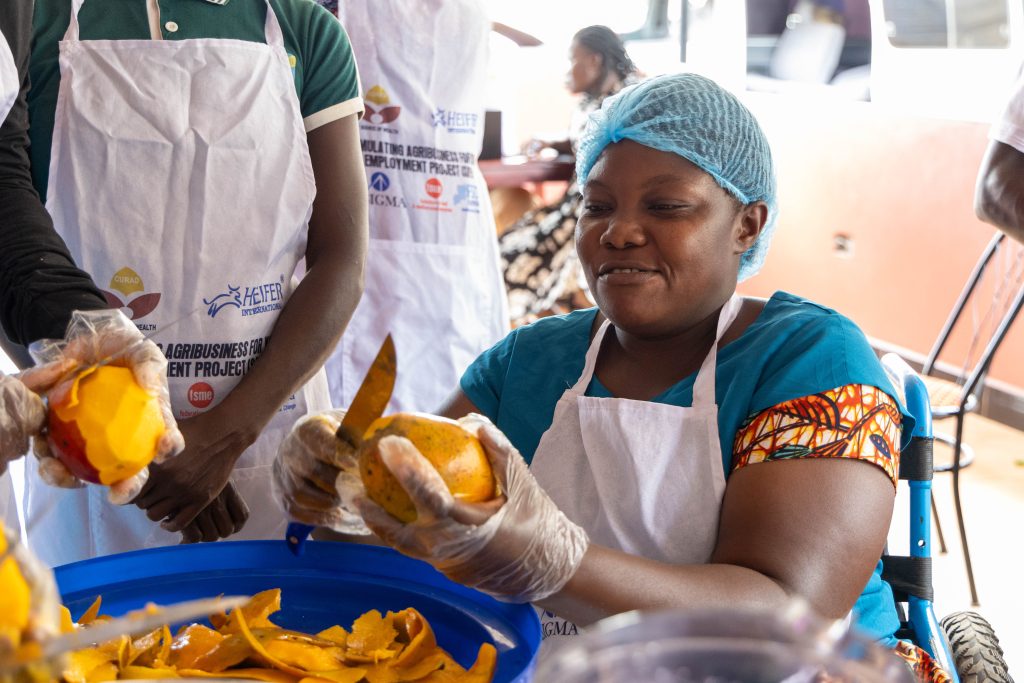
In Namutumba District, 35-year-old Asabaawebwa Jeska begins her day long before the first customers taste Nyonta Mango Juice.
Some days, she coordinates fruit deliveries from nearby villages. On others, she is reviewing production schedules, engaging with team members, or navigating difficult rural roads in search of new market opportunities. In between, she manages farmland where she grows cassava and groundnuts, an additional source of livelihood that supports both her household and long-term ambitions.
From the outside, this may appear to be the routine of a determined entrepreneur building a small enterprise. But for Jeska, every step in this journey has required persistence, resilience, and a commitment to creating opportunities despite years of limited access to employment and economic opportunities.
In 2015, she graduated from Makerere University with a Bachelor of Arts in Library and Information Science, hoping education would open pathways into employment. Instead, she encountered repeated rejection.
“Whenever I attended job interviews, my ability was questioned before my qualifications were considered,” she recalls. “It became clear that I had to create my own opportunity.”
At one point, she worked as a bursar at a secondary school, but the income was insufficient to support both herself and her family. Like many young people in rural Uganda, she turned to small-scale farming, renting land to grow cassava and groundnuts while searching for a more sustainable livelihood.
The turning point: from training to enterprise
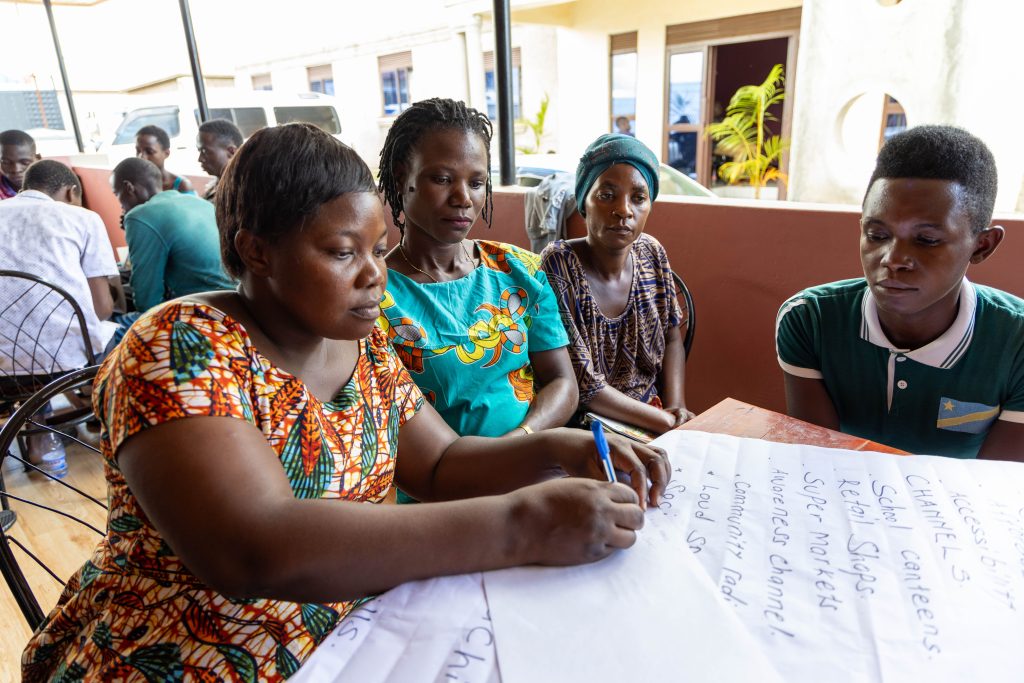
Jeska’s transition into entrepreneurship began when she joined the SAYE Project implemented by Heifer International Uganda in partnership with CURAD, ASIGMA, FSME AND FSDU. . Through the program, she received training in entrepreneurship, financial literacy, product development, and commercialization, alongside access to shared production facilities at CURAD’s Rural Agripark in Kapeeka.
More importantly, she found an environment that allowed her to test ideas, refine them, and turn them into viable businesses.
“I love making juice,” she says. “But through the training, I realized it could become something that creates opportunities for other people as well.”
It was during the incubation journey that Jeska met her future co-founders, and an early idea for adding value to locally available mangoes evolved into a structured agribusiness enterprise.
Building Nyonta: a collective enterprise with rural roots
In August 2025, Nyonta Juice Enterprise was founded by a team of 11 young entrepreneurs with a shared vision of adding value to mangoes sourced from local farmers.
Today, the enterprise produces Nyonta Mango Juice using raw materials sourced from farmers in Namutumba and surrounding communities. What began as a small idea has steadily grown into a structured enterprise that has completed four production cycles while improving product quality, coordination, and market reach across the Busoga region.
Operating from the Consortium for Enhancing University Responsiveness to Agribusiness Development Ltd (CURAD’s) agribusiness production facility in Kapeeka , the enterprise follows a simple but impactful model: local fruit, locally processed, and locally consumed — creating value within the community where the produce originates.
“The name ‘Nyonta’ reflects thirst and refreshment,” Jeska explains. “But it also reflects something familiar and trusted within the community.”
From individual effort to shared livelihoods
While Jeska provides leadership, Nyonta Juice Enterprise operates as a collective venture whose growth is closely tied to the livelihoods of its members and workers.
The enterprise has created employment opportunities for young people engaged in production, sales, and distribution, including three youth directly employed within the community.
For Mukyeyeya Zewurensi, a co-founder and mother of eight, the enterprise has become a source of household stability.
“The juice business has helped me take care of my children’s basic needs,” she says.
For Auma Janet, also a co-founder, the business provides steady income and growing financial independence. Meanwhile, 18-year-old Musasizi Sanon, who works in sales and distribution, describes a deeper personal transformation.
“My life has changed as a young person,” he says. “I now earn from my work, support myself, and I have even started investing in livestock.”
For Jeska herself, the enterprise contributes to household expenses and supports her siblings’ education — marking a shift from survival to stability and from individual struggle to shared prosperity.
Today, the enterprise generates approximately UGX 1.5 million per month, compared to UGX 950,000 in the first two months of operation. It has also completed five production cycles of juice. Beyond Namutumba, the market has expanded to neighbouring districts including Iganga, Bugiri, and border districts such as Busia.
Strengthening rural value chains and changing perceptions
Beyond employment creation, Nyonta Juice Enterprise is strengthening local agricultural systems by providing a reliable market for mango farmers during harvest seasons. This has helped reduce post-harvest losses while improving household incomes for surrounding farming communities.
At the same time, Jeska’s leadership is challenging long-held perceptions about disability and economic participation. In many rural communities, persons with disabilities are often excluded from leadership and enterprise spaces. Jeska is changing that narrative.
She is not only participating in business, she is leading teams, coordinating production, and driving enterprise growth.
“For many people here, seeing a person with a disability leading a business changes their mindset,” she says. “It shows that capability is not defined by physical ability.”
Her leadership is gradually reshaping perceptions of disability, gender, and youth entrepreneurship within her community.
From enterprise to systems voice
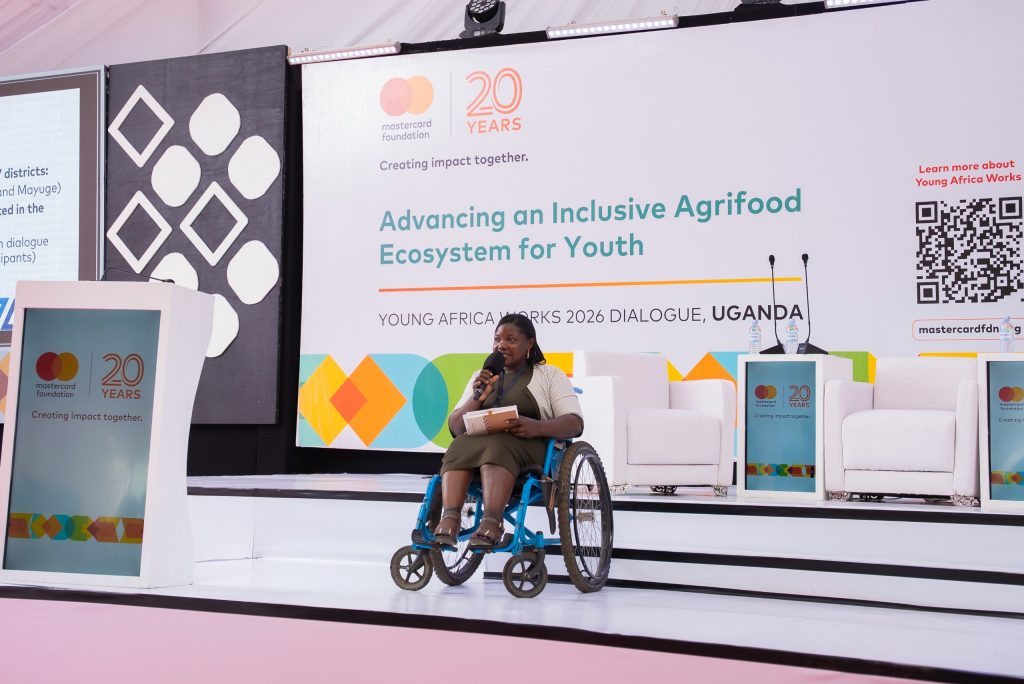
Jeska’s experience has also positioned her as a voice in broader conversations on youth enterprise development. She was recently invited to speak at a convening organized by Mastercard Foundation, where she shared her experience of building a rural agribusiness within constrained systems.
She highlighted structural barriers affecting youth enterprises, particularly delays in certification processes such as UNBS approval, which often limit market access and business growth for rural producers.
Her contribution fed into wider discussions on strengthening the enabling environment for youth-led enterprises, including the need to decentralize certification services and reduce barriers for small businesses operating in rural communities.
A major milestone for the enterprise has been securing Uganda National Bureau of Standards (UNBS) certification, strengthening product credibility and opening opportunities for wider formal market access.
Persistent challenges in a growing enterprise
Despite its progress, Nyonta Juice Enterprise continues to face structural challenges common among rural agribusiness enterprises
High transport costs increase production expenses and limit distribution efficiency, while poor road infrastructure creates mobility challenges for both operations and accessibility.
“Some roads are still difficult to navigate,” Jeska explains. “But we continue because the impact is worth it.”
Like many growing enterprises, the business has also experienced internal transitions, with only five of the original 11 founders remaining actively engaged as the enterprise matures.
Looking ahead: scaling impact and opportunity
Nyonta Juice Enterprise is now focused on scaling production and strengthening its market presence across Uganda, with ambitions to increase output from 2,000 litres per month to 10,000 litres per month.
The enterprise hopes to improve transportation and distribution systems, expand employment opportunities for young people and women, and establish a dedicated juice processing facility that will support larger-scale and more consistent production. The long-term vision is to build a sustainable agribusiness that not only generates income, but also strengthens inclusive rural economic systems and expands opportunities for youth, women, and marginalized groups.
From years of exclusion in the job market to leading a growing enterprise, Jeska is building more than a juice business. She is demonstrating how access to skills, infrastructure, and enterprise support can unlock innovation, dignity, and economic participation for communities often left behind.
“Passion can become purpose, but purpose becomes powerful when it creates opportunities for others.”
— Asabaawebwa Jeska
